
GaN Technology Enters the Automotive Sector
2024-09-20
With the development of new energy vehicles and autonomous driving technologies, there is a growing demand for high-efficiency, high-density power electronics. GaN, as an emerging semiconductor material, shows great commercial potential in the automotive market due to its excellent electronic properties and potential system cost advantages.

First, GaN power devices can be used in power electronic converters for electric vehicles, such as chargers and converters.GaN devices enable more compact designs and higher power densities than conventional silicon devices, which means lighter weight powertrains and higher energy efficiency for electric vehicles.
In addition to applications in powertrain systems, GaN shows great potential in automotive LIDAR. Lidar is a key component of autonomous driving technology, and the high efficiency and compact size of GaN devices make them ideal for Lidar systems. Compared with earlier LIDAR products, GaN devices have dramatically increased switching speeds and reduced pulse widths to 1/5th of the original. the use of GaN with narrow pulses, high peak currents, and high power can provide superior performance support for LIDAR.
At the same time, GaN technology can also be applied to electric vehicle charging piles for providing efficient, high power density power conversion. GaN power devices can realize miniaturized design of charging piles and high-efficiency power transmission, thus improving charging efficiency and user experience.
1.Silicon Devices with SiC and GaN Market Trends
Traditional silicon (Si) devices include rectifiers, thyristors, bipolars, X-FETs (e.g., MOSFETs and JFETs), and IGBTs, as well as modules and IPMs. as technology evolves, silicon carbide (SiC) and gallium nitride (GaN) are beginning to take on an increasingly important role in the power electronics market.
● SiC and GaN are expected to represent more than 30% of the power market by 2028, demonstrating the huge commercial opportunity for both materials.
● The GaN power device market is growing rapidly and is expected to reach a commercial opportunity of $504 million by 2028. This growth is primarily due to GaN's high density, high efficiency, and potentially lower in automotive powertrains
● The power GaN ecosystem is evolving and maturing. More innovations and breakthroughs are expected in the coming years as new entrants come on board. These new entrants are likely to come from a variety of fields including, but not limited to, semiconductors, materials science, and automotive engineering.
● The GaN power device market is growing rapidly and is expected to reach a commercial opportunity of $504 million by 2028. This growth is primarily due to GaN's high density, high efficiency, and potentially lower in automotive powertrains
● The power GaN ecosystem is evolving and maturing. More innovations and breakthroughs are expected in the coming years as new entrants come on board. These new entrants are likely to come from a variety of fields including, but not limited to, semiconductors, materials science, and automotive engineering.
2.Applications in the automotive market
In automotive powertrains, GaN applications focus on three main areas: higher power density, higher efficiency and potentially lower system cost. These advantages make GaN ideal for 800V models of electric vehicles (EVs), which are increasingly adopting SiC technology.


In addition to applications in powertrains, GaN is showing great potential in automotive laser radar (Lidar). Lidar is a key component of autonomous driving technology, and the high efficiency and compact size of GaN devices make them ideal for Lidar systems.
Gallium nitride (GaN) has a promising future in the automotive market. As the technology continues to advance and the ecosystem matures, GaN is expected to realize a wider range of applications in areas such as automotive powertrains and LIDAR in the next few years, and we look forward to seeing more research and development on GaN, as well as the emergence of new business opportunities.
What Is USB-PD?
GaN, a technology inflection point
Related Article
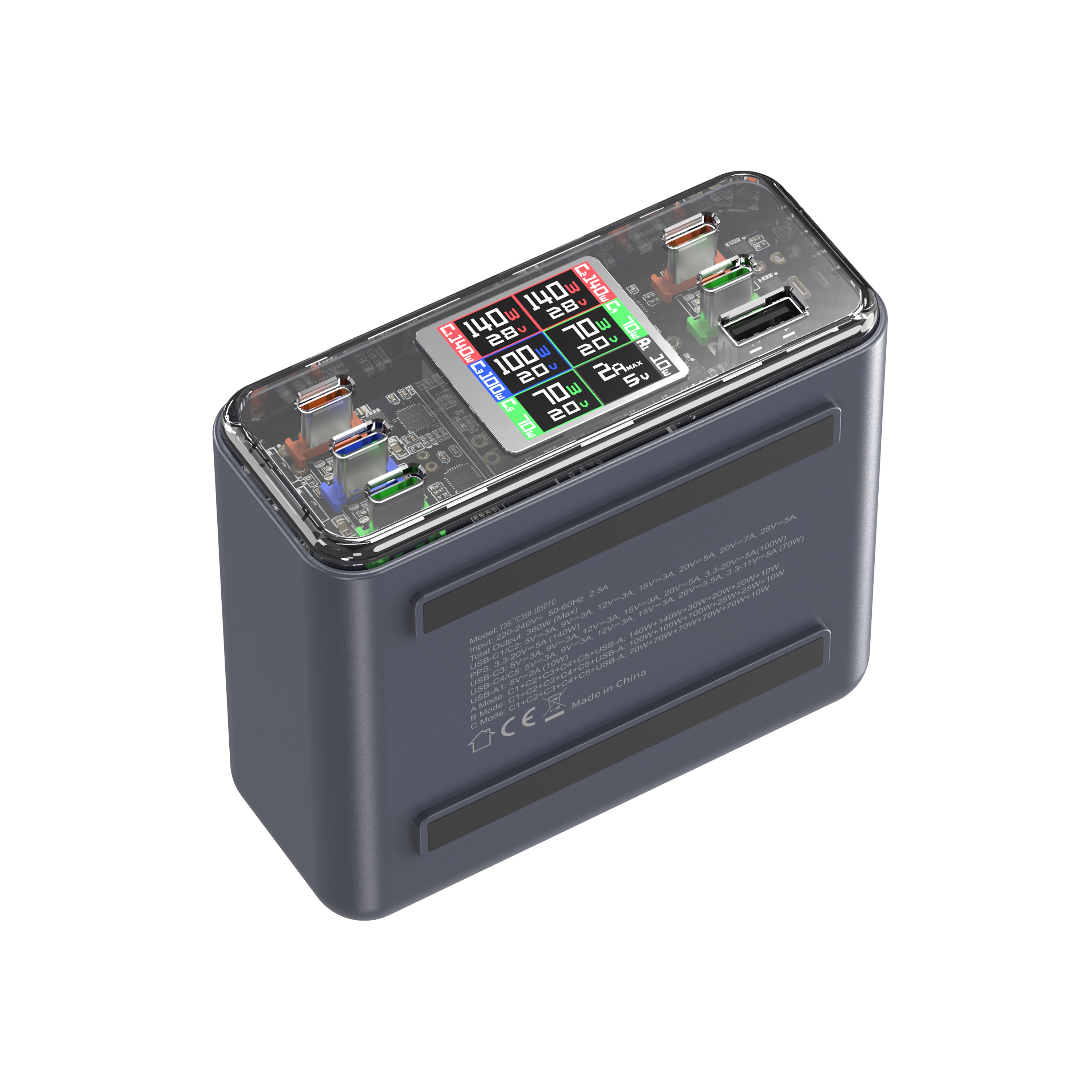
USB Power Delivery (USB-PD) is a universal fast charging protocol developed by USB-IF. The latest USB-PD 3.1 enables USB-C cables to deliver up to 240W of power, featuring adjustable voltage, bidirectional power flow, multi-device simultaneous charging and smart power negotiation. It's safe and efficient, widely used for various electronic devices from smartphones to laptops.
What Is USB-PD?
